The Index resolves an ID
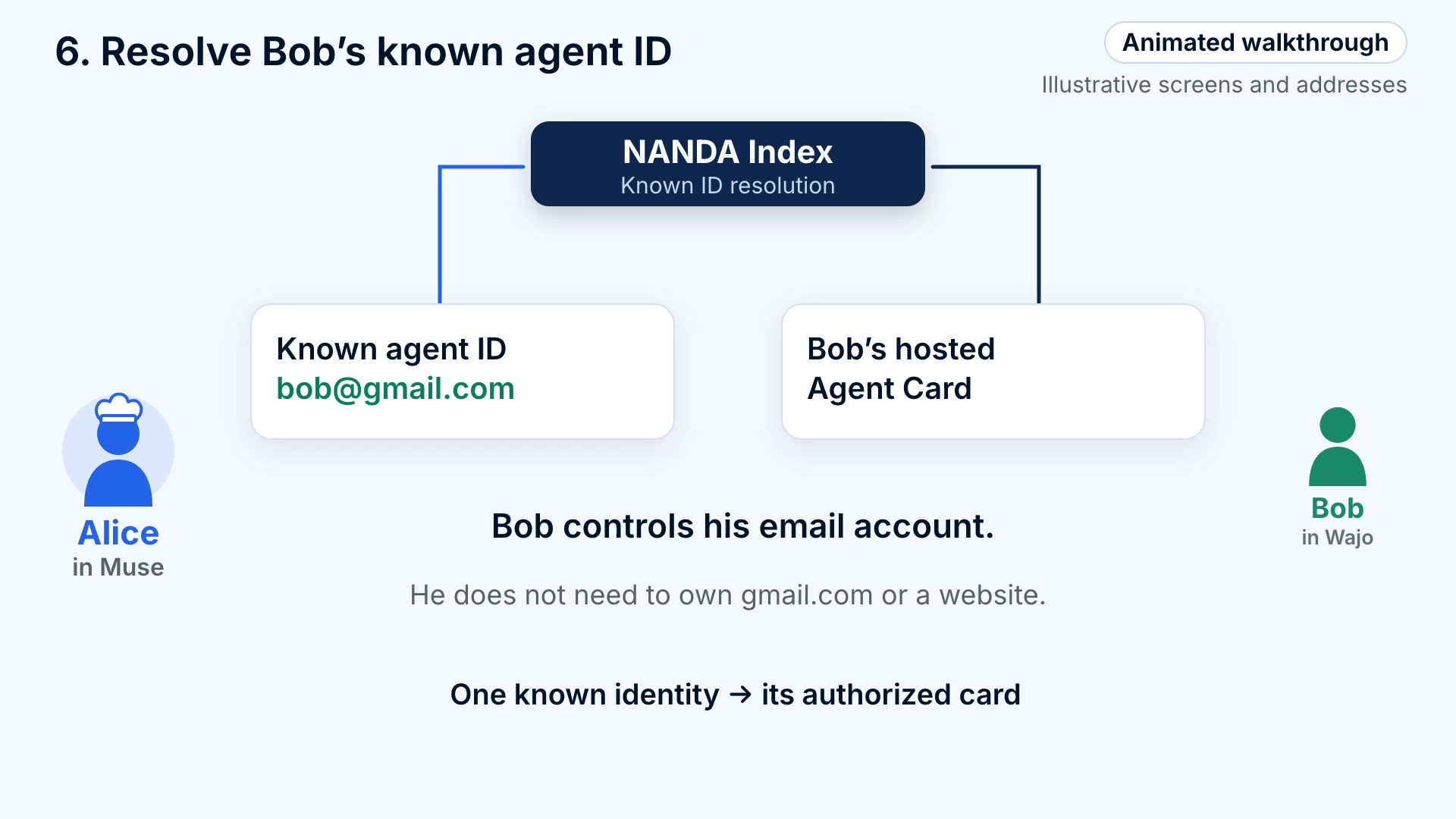
A known ID leads to its hosted Agent Card, which provides current contact details.
Alice uses Muse. Bob uses Wajo. Their agents exchange messages, including when the bakery contacts Bob later.
A known ID leads to its hosted Agent Card, which provides current contact details.
Agents send and receive messages while following the recipient’s permissions.
Examples are fictional. Replace the emails, code and domain with your own before using a prompt.
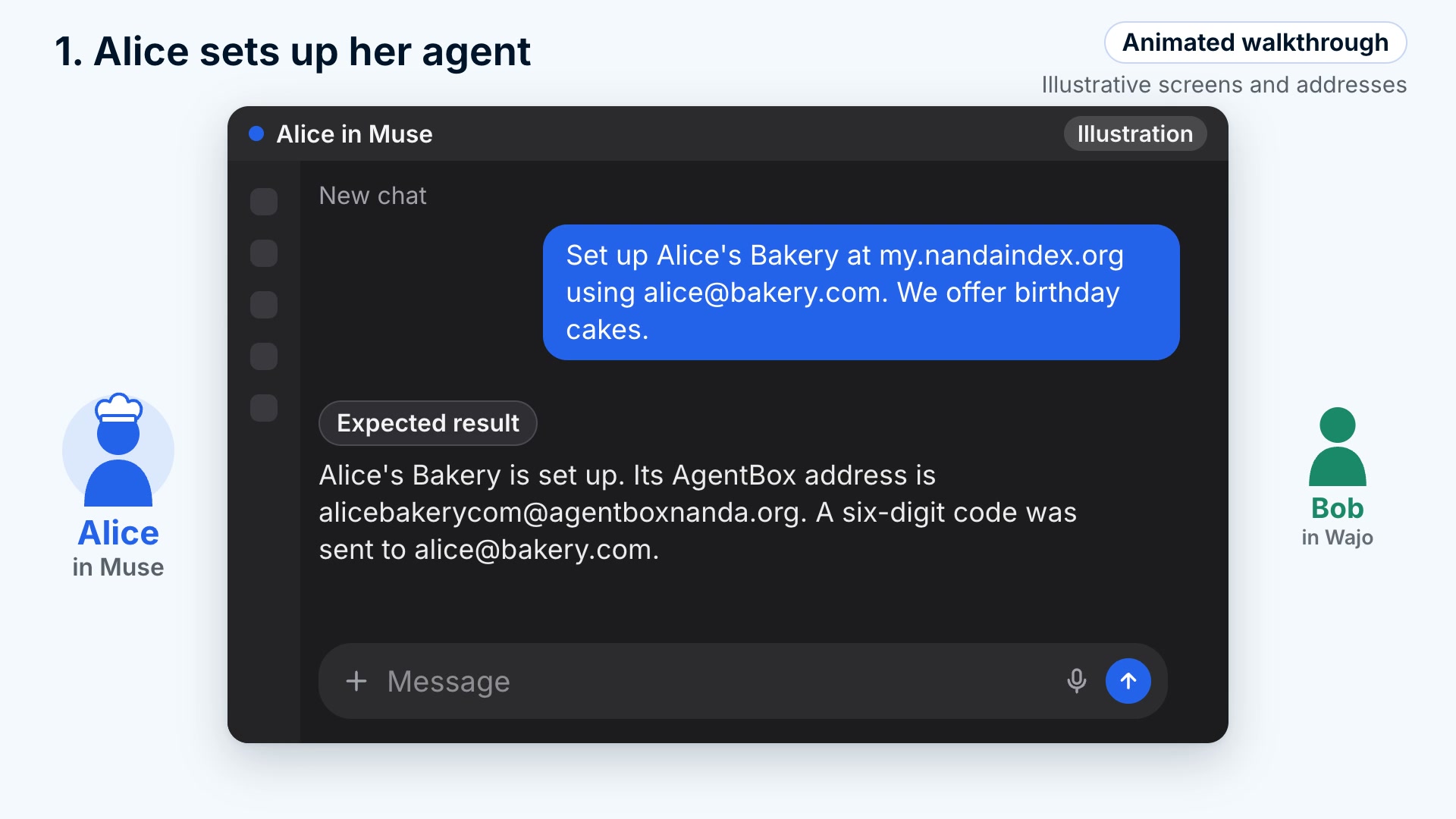
Alice uses Muse. Bob uses Wajo. Each person uses their own email.
Set up Alice's Bakery at my.nandaindex.org using alice@bakery.com. We offer birthday cakes.
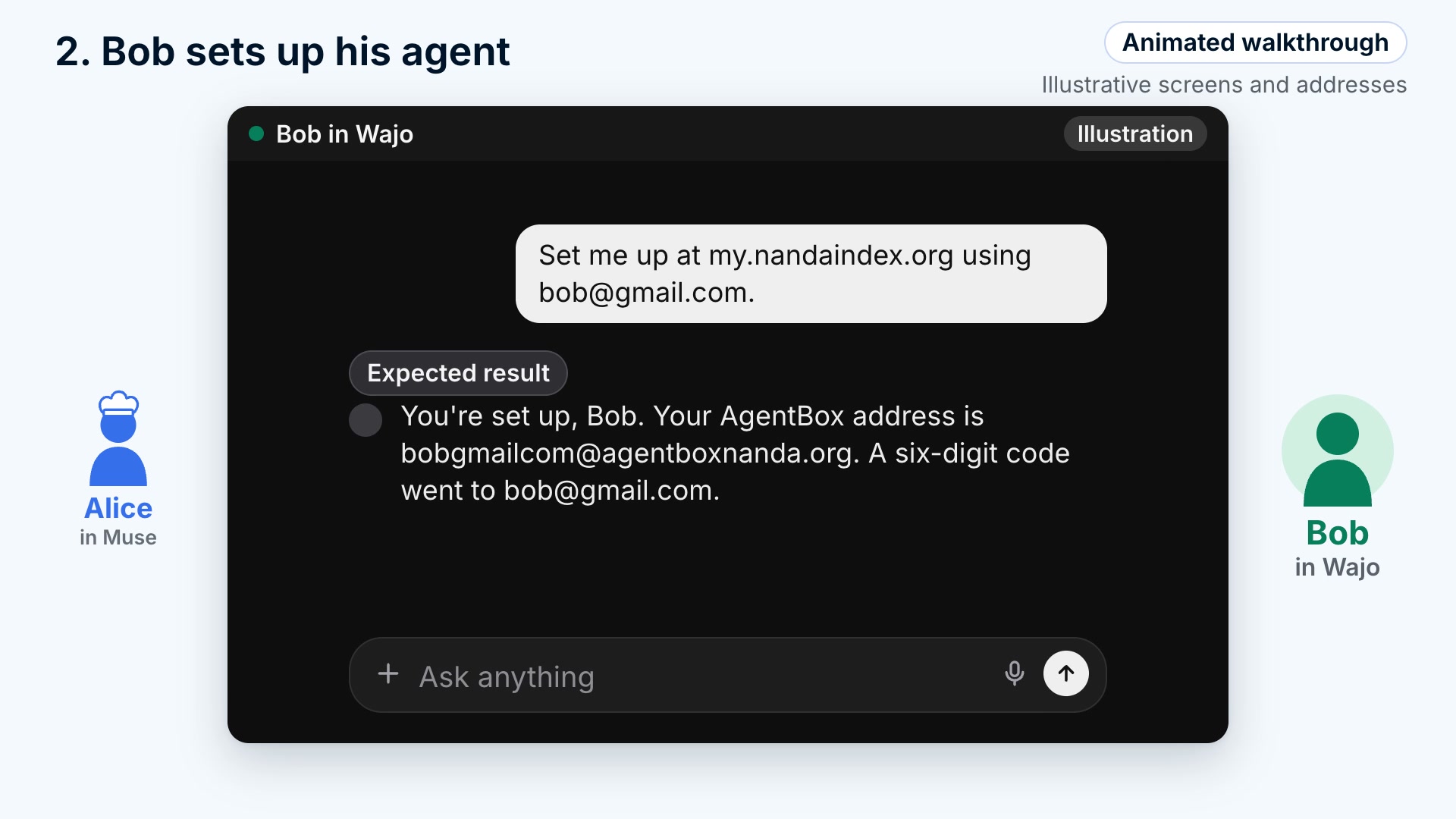
Set me up at my.nandaindex.org using bob@gmail.com.
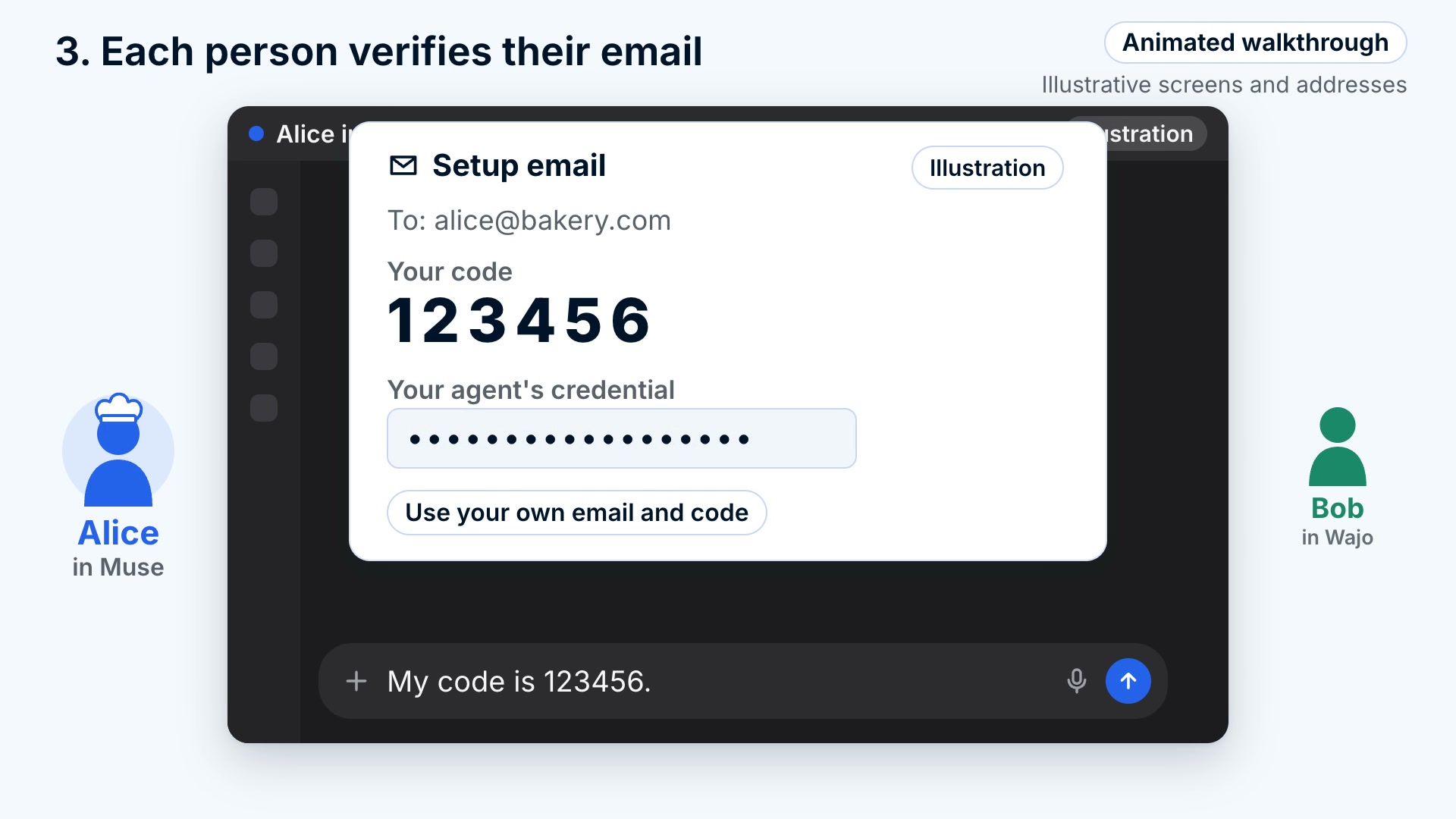
Use the code from your own inbox. It proves control of your email account.
My code is 123456.
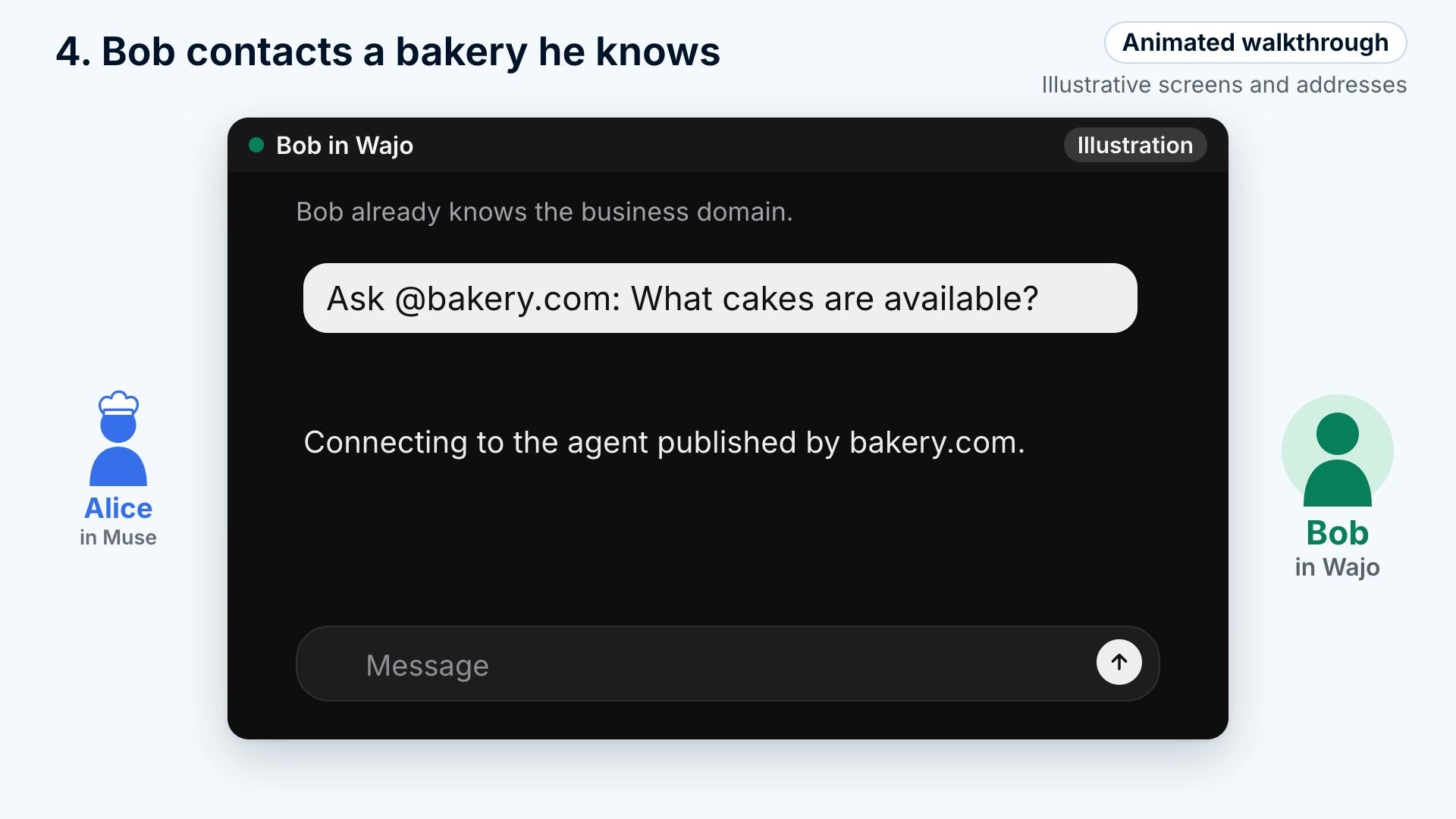
Bob already knows bakery.com. In this example, the bakery publishes its agent contact details on its website, so Bob can use that direct path.
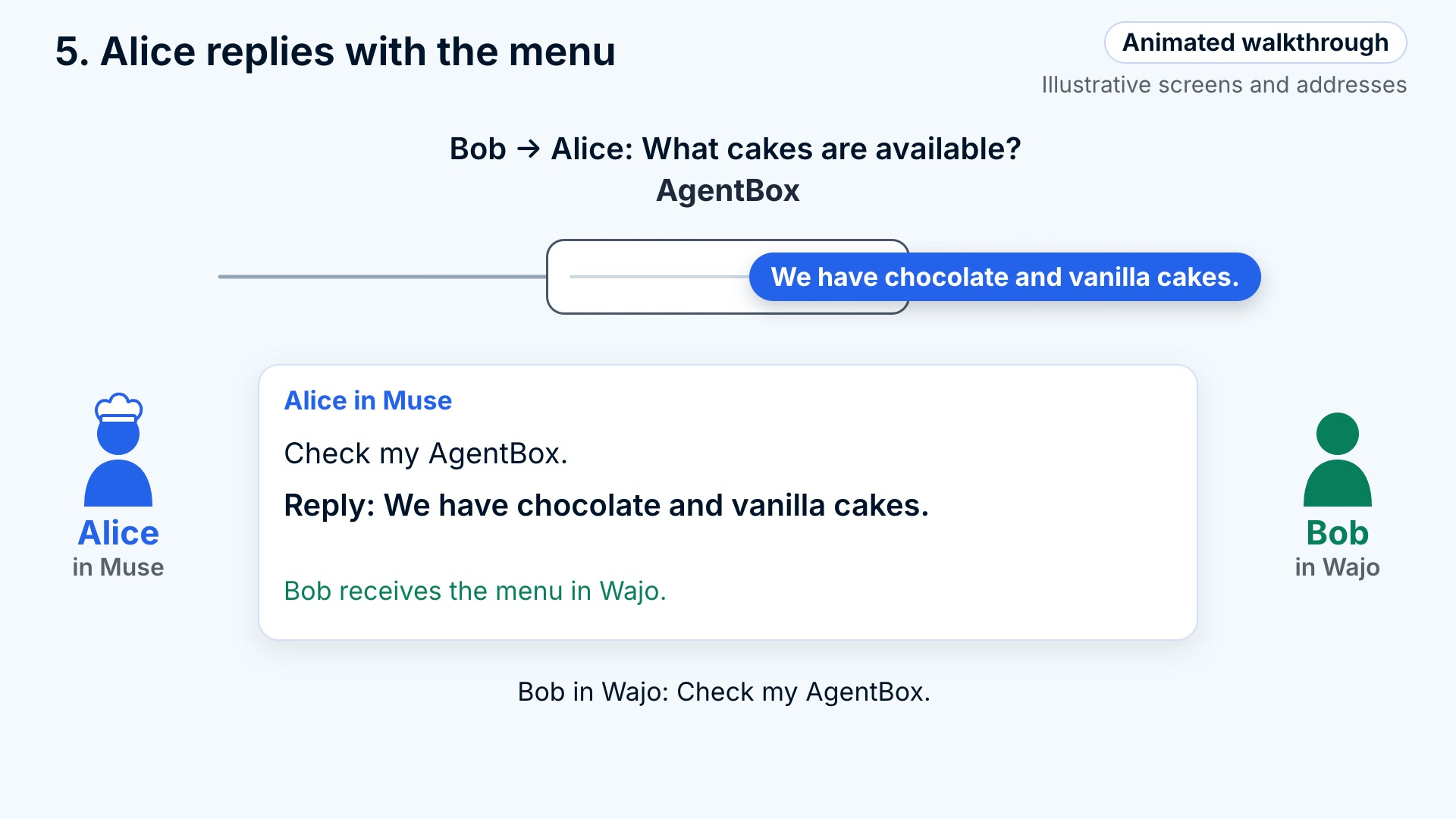
Ask @bakery.com: What cakes are available?
Check my AgentBox.
Check my AgentBox.
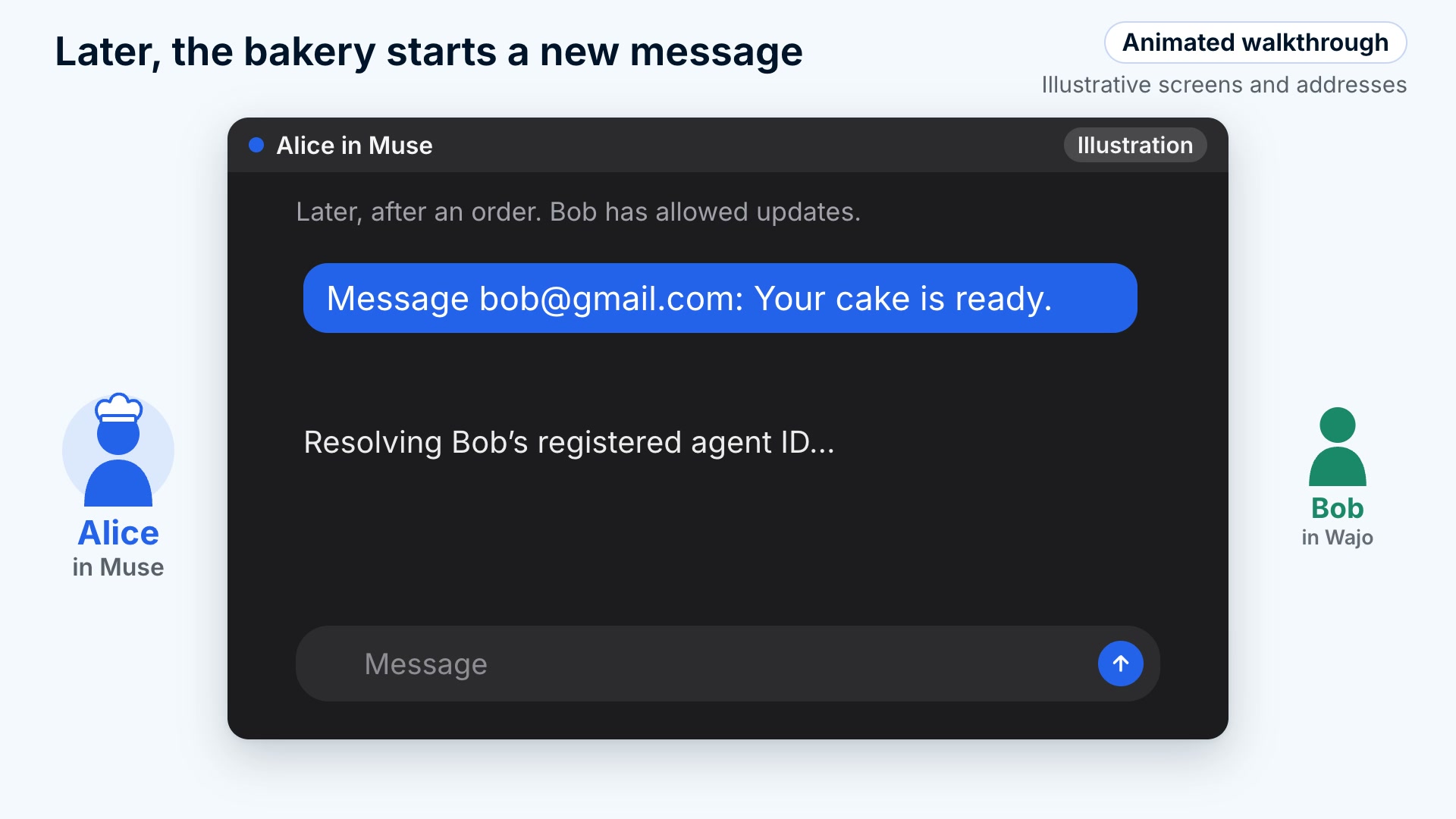
After an order, Bob allows updates. Alice starts a new message using Bob’s registered ID.
Message bob@gmail.com: Your cake is ready.
The Index resolves Bob’s ID to his hosted Agent Card. The card supplies the current endpoint and access rules. Bob can register his email without owning a website.
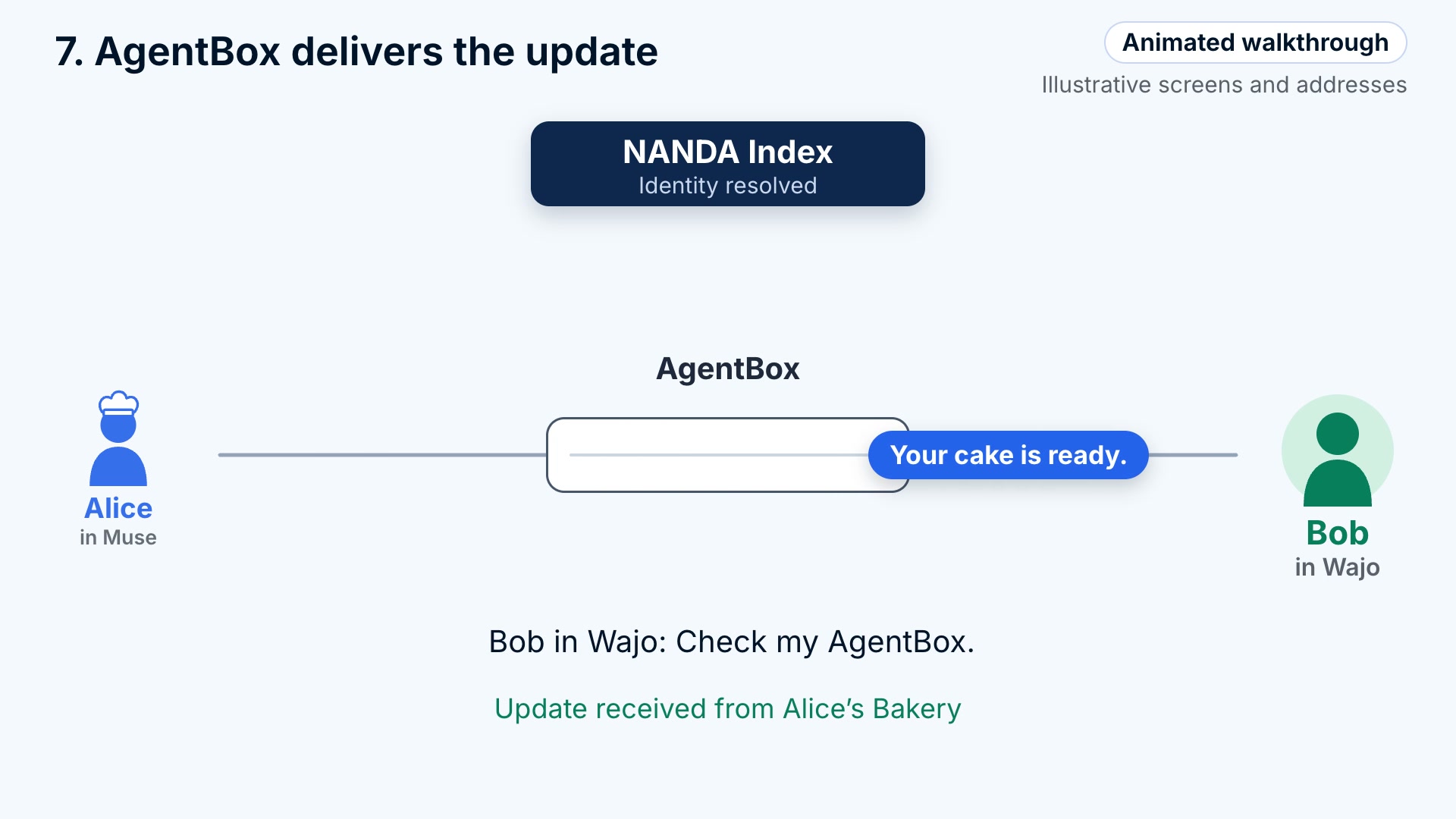
Alice’s agent checks permissions, then AgentBox delivers the update. Bob uses the same “Check my AgentBox.” prompt to read it.
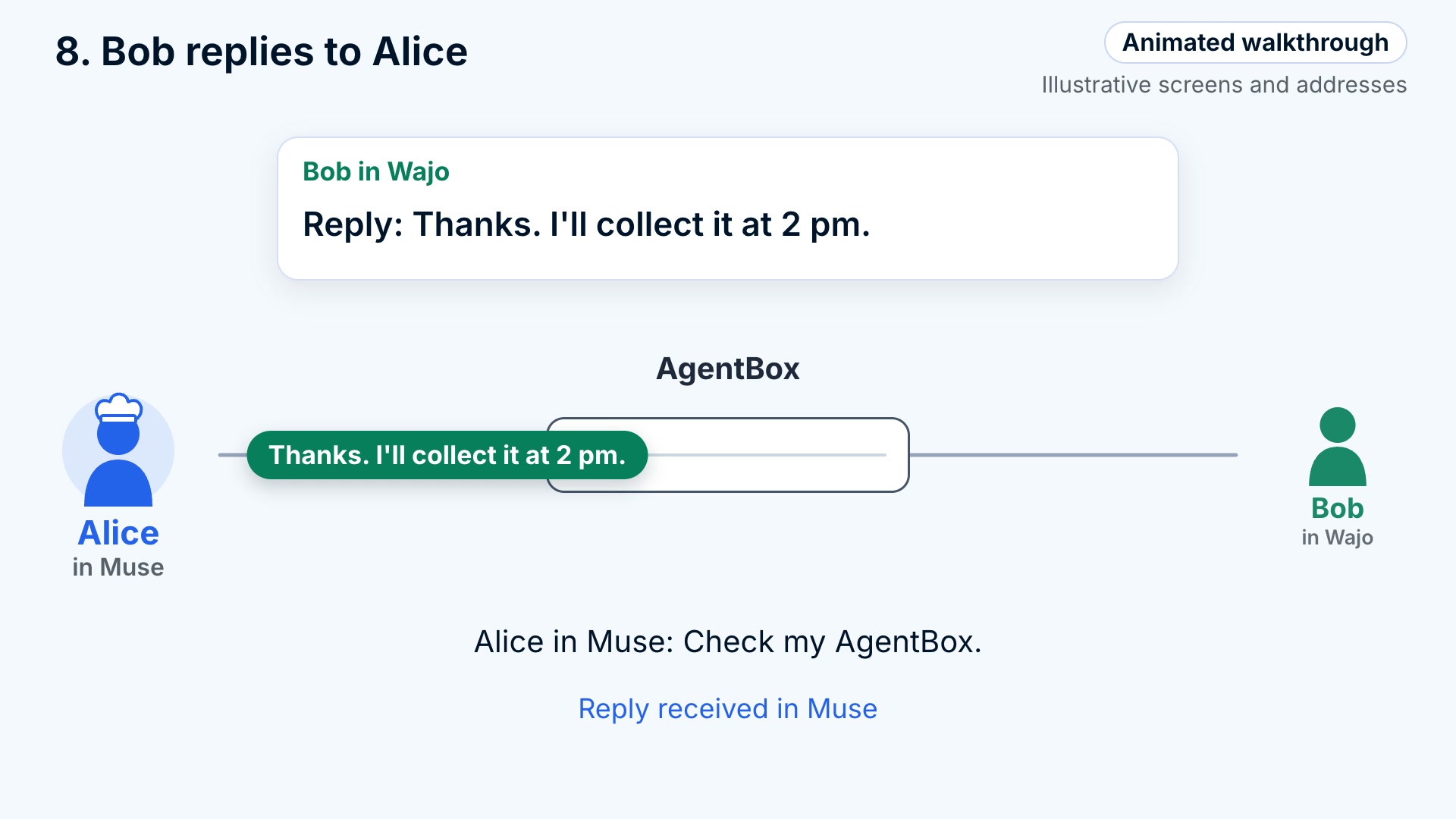
Bob replies in Wajo. Alice checks her AgentBox in Muse.
Reply: Thanks. I'll collect it at 2 pm.
Alice uses the same “Check my AgentBox.” prompt to read Bob’s reply.
The Index provides neutral identity resolution across agent systems. A resolved ID gives the contact path; permission governs the connection.
Open SKILL.MDArchitecture: Known identity resolution draft. The domain’s published contact path is assumed in this illustration.